Zendaya: From Disney Channel to Global Constant
Emmy records, two of the era's biggest franchises and a deliberate fashion signal keep Zendaya among the most searched performers of her generation.
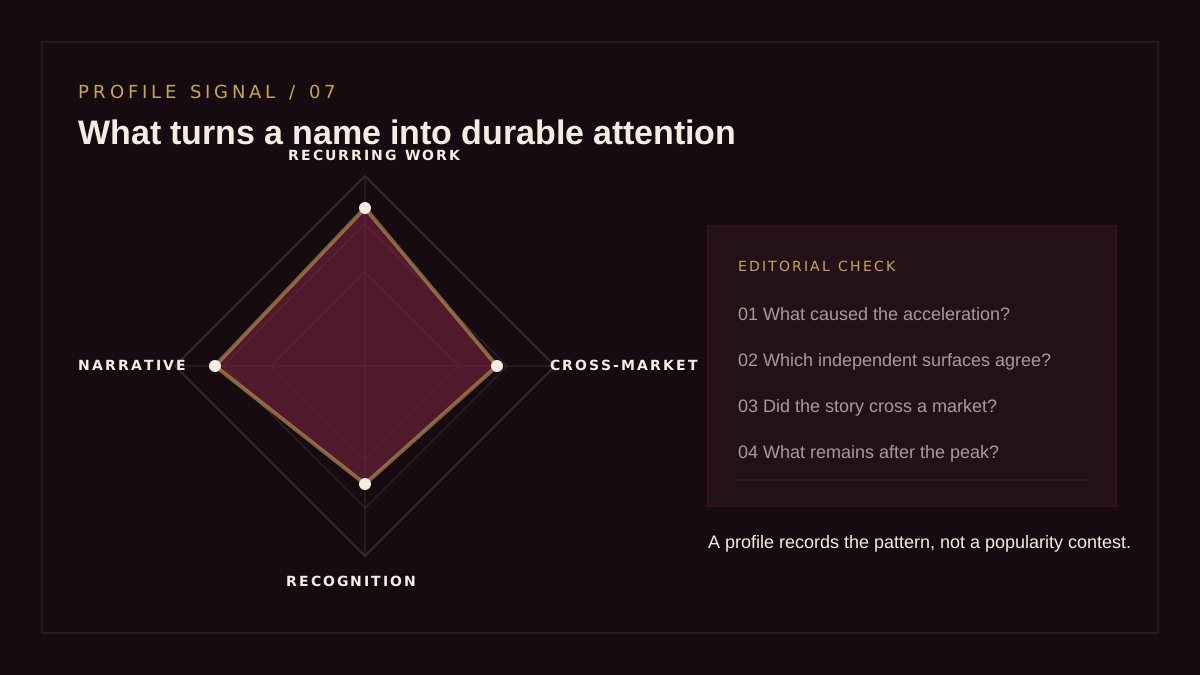
Zendaya’s career is a study in compounding attention. Each phase — child performer, franchise lead, Emmy-winning dramatic actor, fashion signal — added an audience without shedding the previous one, leaving her among the most consistently searched performers of her generation.
From Disney to Euphoria
Born in Oakland in 1996, Zendaya Coleman spent her teens on the Disney Channel, leading Shake It Up from 2010 and then K.C. Undercover, where she negotiated a producing credit while still a teenager. She released the single “Replay” in 2013 and reached the finals of Dancing with the Stars the same year, building a broadcast audience before her first film work. The decisive pivot came in 2019 with HBO’s Euphoria: her performance as Rue Bennett won the Primetime Emmy for Outstanding Lead Actress in a Drama Series in 2020, making her the youngest winner in the category’s history. A second win in 2022 made her the youngest two-time acting winner in the awards’ history, with a Golden Globe following.
Franchise anchor
In parallel, she attached herself to two of the era’s biggest film properties. She played MJ across the Spider-Man trilogy that ran from Homecoming in 2017 to the box-office phenomenon No Way Home in 2021, and Chani in Dune and its 2024 sequel — a role that expanded from glimpses in the first film to co-lead of the second. Between the two franchises she held her own opposite Hugh Jackman as the trapeze artist Anne Wheeler in The Greatest Showman. In 2024 she also led and produced Challengers, Luca Guadagnino’s tennis drama, extending a producer track begun at Disney and continued with Malcolm & Marie.
The fashion signal
Zendaya generates a second, independent attention stream with clothes. Working with the stylist Law Roach across her entire career, she turned premieres and Met Gala appearances into planned media events, and in 2021 she became the youngest recipient of the CFDA’s Fashion Icon Award. Her press tours are tracked by fashion desks as closely as her films are tracked by entertainment desks — a dual-coverage pattern few performers sustain, and one reason her name registers on the board even in quiet stretches of the release calendar.
Her file sits in the People index; the category dynamics her career spans — film, television, fashion — are mapped on the Topics desk.
Why the attention pattern lasts
Zendaya’s attention profile combines several calendars that rarely peak at the same time. Television, major film franchises, producing work, awards and fashion appearances each create their own discovery route. When one cycle quiets, another can reactivate the name, producing repeated moderate-to-large spikes instead of dependence on a single annual release.
The cross-platform confirmation is equally important. Screen work drives search and trailer activity; premieres and red carpets travel through image-led feeds; interviews and production news sustain conversation between releases. The signals reinforce one another without being identical, which is the signature of durable attention rather than a coordinated burst. For the index, her baseline illustrates compounding recognition: each successful cycle leaves more people prepared to notice the next one, so later announcements accelerate from an already elevated floor.